
Among Sensex shares, HCLTech, Asian Paints, Maruti, JSW Steel, TCS, SBI, ITC and Bharti Airtel were the major losers. On the other hand, Bajaj Finserv, Mahindra & Mahindra, Titan, L&T and Wipro were the major gainers.

The founders of Gland Pharma, led by Ravi Penmetsa, and KKR, together own 96 per cent of the company.
Benchmark equity indices climbed nearly 1 per cent on Wednesday on buying in HDFC Bank and Reliance Industries. Investors are eyeing the two important events lined up ahead -- the interim budget and the US Fed interest rate decision -- to derive further cues from. Recovering all the early lost ground, the 30-share BSE Sensex jumped 612.21 points or 0.86 per cent to settle at 71,752.11.

Companies run till now by mostly their promoters are increasingly inducting professionals to head their teams.
Supreme Court is saying that consumers should not be forced to pay higher prices just because it is chemically a new drug unless there is a therapeutic benefit involved.

'Corporations that were recruiting 15 or 20 [students] have reduced the number to two or three.'

Sun Pharmaceutical Industries Ltd on Monday said its Michigan-based wholly owned subsidiary,

'The deaths of the children in the Gambia would batter India's reputation as the developing world's pharmacy.'

Among the Sensex firms, IndusInd Bank was the biggest loser and fell 6.13 per cent, followed by SBI (3.99 pc), Hindustan Unilever (3.82 pc), Axis Bank (3.41 pc) and HDFC Bank (3.23 pc). In contrast, Sun Pharma, Bharti Airtel, ICICI Bank and PowerGrid defied the trend and closed with gains of up to 3.67 per cent. TCS and Bajaj Finserve were the other gainers.

From the Sensex basket, Asian Paints, Sun Pharma, HDFC Bank, Tata Consultancy Services, Axis Bank, Tata Steel, JSW Steel, Larsen & Toubro, ICICI Bank and Power Grid were the major gainers. Tata Motors dropped over 8 per cent despite reporting over three-fold jump in consolidated net profit at Rs 17,528.59 crore for the fourth quarter ended March 31, 2024. NTPC, Bharti Airtel, Titan, State Bank of India and Nestle were the other major laggards.

According to industry estimates, the sector's revenue would increase eight-10 per cent in 2013-14, against 12 per cent in 2012-13.
Ranbaxy's troubled plants in India could see a turnaround as Sun Pharma has experience in doing so.

Currently, 100 per cent FDI is permitted in brownfield pharma firms through clearance from the Foreign Investment Promotion Board.

Aurobindo Pharma, Cadila Healthcare and Serum Institute are readying their vaccine candidates.
RIL is grappling with other priorities -- sliding oil prices, shrinking refining margins and a battle with the Anil Ambani group over the supply of gas. The plan was to build an integrated pharma company in two to three years, on the lines of large domestic majors such as Ranbaxy's or Dr Reddy's Laboratories. Instead, the plan has been modified to being a start-up bulk drug manufacturing company that will launch six bulk drugs or active pharmaceutical ingredients by 2010.
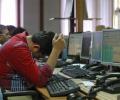
Equity investors suffered a massive loss of Rs 31 lakh crore on Tuesday as markets went into a tailspin with the BSE Sensex tumbling nearly 6 per cent as vote counting trends showed the BJP may not have a clear majority in the Lok Sabha polls. Erasing the record-rally of the previous trade, the 30-share BSE Sensex cracked 4,389.73 points or 5.74 per cent to settle at 72,079.05. During the day, the benchmark tanked 6,234.35 points or 8.15 per cent to hit a nearly five-month low of 70,234.43.

Among the index heavyweights, Reliance Industries ended down 1.9% while mortage lender HDFC eased 0.2%. FMCG major ITC ended down 1.3%.
A Pharmaceutical company was on Sunday gutted in a fire in Samba district of Jammu and Kashmir.
ITC was the biggest loser from the Sensex pack, sliding 2.04 per cent, followed by Power Grid, Reliance Industries, Larsen & Toubro, Nestle, Kotak Mahindra Bank, Bajaj Finance and JSW Steel. On the other hand, Titan, State Bank of India, Bajaj Finserv, Axis Bank, Tata Steel, Sun Pharma, Tech Mahindra and Bharti Airtel were the gainers.

Sun Pharma was the biggest loser among Sensex components, plunging 3.94 per cent, followed by Tata Steel falling 3.12 per cent.

Global capability centres (GCCs) are increasingly looking to tap into revenue opportunities from the Indian market, which is already a critical talent hub. While capturing the potential of the Indian market has been in the works over the past few years, it's only of late that companies are gaining momentum. India is home to more than 1,580 GCCs, with a total market size of $46 billion and growing at a compound annual growth rate (CAGR) of 11.4 per cent, according to a Nasscom-Zinnov report.

Data also show that several other leading domestic pharma companies have recalled their products from the US

Sun Pharma's offer was tempting because Ranbaxy was too busy fighting fires in the US to concentrate on operations.

Top 5 losers include Lupin, Cipla, Sun Pharma, Dr Reddy's Lab and GAIL down 1.6%-11%.

Ranbaxy was asked to sell all products containing Leuprorelin which are marketed and supplied under brand name Eligard.

Among the Sensex firms, Bajaj Finance fell by nearly 3 per cent, the most among the 30 frontline companies. Bajaj Finserv, Axis Bank, HDFC Bank, Reliance Industries, NTPC, ICICI Bank and IndusInd Bank were the other major laggards. In contrast, Tata Motors, Sun Pharma, Maruti and Mahindra & Mahindra were the gainers.
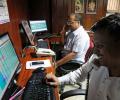
Sun Pharma emerged as the biggest gainer from the Sensex pack, climbing 2.09 per cent, followed by ITC, Titan, Bajaj Finance, Nestle, Infosys, L&T, JSW Steel, Reliance Industries and Kotak Mahindra Bank. UltraTech Cement, Maruti, HDFC Bank, Wipro, State Bank of India and NTPC were among the laggards.

The commerce ministry has sought a review of foreign direct investment policy in the pharmaceutical sector, in the light of recent takeovers of domestic companies by multinationals.

Acquisition to boost its generics business in developed markets.

Nearly 40 per cent of IITians sitting for placements in 2024 are yet to receive job offers, showing a doubling of the 'unplaced' in the last three years from 19 per cent in 2021-2022 to 38 per cent in 2023-2024.
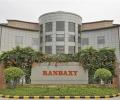
Last month, the high court had ordered an interim status quo on the $4-billion deal, after a suit from some individual investors alleged insider trading in Ranbaxy's shares by Silverstreet Developers, Sun's wholly owned arm, before the deal was announced on April 6.

People close to Shanghvi reveal he is known to make surprising moves both inside and outside the pharma industry.
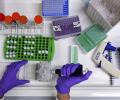
Sun Pharmaceutical, which is growing its dermatology and ophthalmic specialty business in the US will spend $460 million on R&D.

Under MRA, Japan is to recognise Indian medical degrees and treat the country's doctors and other medical personnel on par with its own.

Among the 30 Sensex companies, Larsen & Toubro, Power Grid, NTPC, State Bank of India, Reliance Industries and HDFC Bank were the biggest laggards. Sun Pharma and Nestle were the only gainers.
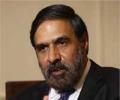
Data exclusivity provides protection to the technical data generated by innovator companies to prove the merit of usefulness of their products.

The challenge of merging Ranbaxy into the company has not been factored in.
